
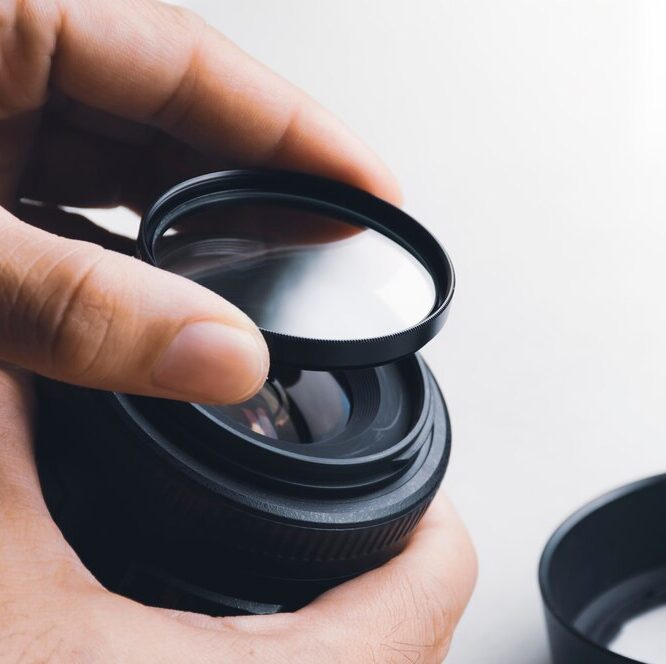
In the high-tech world of industrial imaging, innovation and precision are literally pivotal. One such groundbreaking innovation that’s transforming the landscape of specialized imaging is UV lens technology. Known for its ability to capture details beyond the capabilities of the human eye, UV lenses are opening new frontiers across various industries. But what makes these lenses so unique, and how are they meeting specialized imaging needs? Let’s delve deeper.
The Basics of UV Lens Technology
UV (ultraviolet) lenses are specifically designed to capture images using ultraviolet light, which resides beyond the visible light spectrum. This capability enables these lenses to capture details invisible to standard optical sensors. They’re tailored to block visible light, focusing solely on UV wavelengths, thus enhancing the images’ clarity and detail. By unlocking these unseen wavelengths, UV lenses provide unparalleled imaging for applications demanding precise detail and examination.
Applications in Industrial Imaging
UV lens technology finds critical applications in numerous industrial fields. Here’s how various sectors leverage this advanced technology:
- Forensic Analysis: UV lenses are quintessential in forensic analysis, allowing investigators to detect traces of substances not visible to the naked eye.
- Semiconductor Inspection: The semiconductor industry relies on UV imaging to inspect wafers and components at a microscopic level, ensuring the flawless function of devices.
- Art Restoration and Authentication: Art conservationists and authenticators use UV imaging to study paint layers and surface alterations, offering insights into an artwork’s age and originality.
- Medical Research: In the medical sector, UV lenses assist in studying cell structures and infectious agents that standard imaging techniques could literally miss.
Choosing the Right UV Lens
Selecting the appropriate UV lens for your industrial application requires understanding your specific needs. Consider the following factors:
- Wavelength Range: Determine the UV wavelength range needed for your application. Some tasks require deeper UV capabilities, while others are fulfilled with near-UV. The VA Imaging official website provides detailed specifications to help guide your choice.
- Resolution & Sensitivity: High resolution and sensitivity to UV light are crucial for crisp, clear, and detailed images.
- Build Quality and Durability: Industrial environments often challenge equipment integrity. A robustly built lens ensures longevity and reliability.
Future Prospects of UV Lens Technology
The evolution of UV lens technology continues to spark interest in future-oriented industrial applications. As research advances, we can expect more compact, affordable, and efficient lenses to become available. The integration of AI with UV imaging could potentially automate and enhance precision in applications like quality control and predictive maintenance.
Capturing the Invisible
UV lens technology is reshaping industrial imaging by unlocking an entire spectrum of invisible possibilities. As industries literally strive for perfection and detail, leveraging UV lenses offers a pathway to enhanced vision and understanding. Whether it’s identifying a minute defect in manufacturing or unraveling the secrets of historical artifacts, UV lenses are the lenses of tomorrow, today. Thus, embracing these technologies not only fulfills current specialized imaging needs but also prepares industries for future advancements. With every detail captured and every image perfected, the future of industrial imaging shines bright under the invisible light of UV technology.